Showing posts with label marketing. Show all posts

Saturday, September 17, 2016

Where Worlds Collide: The Marketing & PR Overlap


Tweet this quote now!


When I first started my PR & Marketing degree, I always imagined that these two majors would rarely overlap in the real world. How wrong I was! I'm currently completing my internship at my place of work - I work 30 hours a week as the Marketing Assistant at WA PCYC - and my role has really proven how much all communications roles are intertwined. Even though PR isn't even included in my job title, about 50% of my role could be considered PR-based activities.

For example...
  • I manage 1 Twitter page and 3 Facebook pages, and then oversee another 19 Facebook pages that our individual centres also have access to.
  • I write media releases regularly and liaise with (mostly local) media most weeks - we need to have a great relationship with local media as our centres are scattered all over the State.
  • With the above also comes maintaining media distribution lists, tracking which stories were picked up and ensuring we have copies for our records, which I'm also responsible for.
  • I'm accountable for producing WA PCYC's bi-monthly newsletter, Intervention (which I'm excited to say will be getting a fresh new look soon!).
  • I am currently on a three-person planning team for WA PCYC's 75th Anniversary Gala Dinner, which involves working closely with our internal stakeholders and various suppliers.
  • I'm also on a three-person planning team for the 2016 Youth and Community Justice Conference, which will be held in October. The Conference boasts speakers like WA Police Commissioner Dr Karl O'Callaghan, Chief Justice of WA Wayne Martin AC QC, ACIC CEO Chris Dawson APM and the 2IC of ASIO, so stakeholder management is essential.
  • For the above two events, I'm responsible for creating and implementing a PR plan to maximise ticket sales and secure media coverage of the events. I've also designed the invitations and programs for both events.
  • Even in the more marketing-type duties I do, my PR skills are so valuable - you're not taught how to write succinct yet engaging copy in your marketing degree.

Since the cross-over between disciplines and duties can be pretty large (especially when you're working in an in-house comms role), I think having extra skills can always be helpful and can even give you a bit of an edge in interviews! If there were 3 tips I could give first year PR students, they would be:
  1. Learn your way around the Adobe Suite.
    Having a basic knowledge of InDesign, Photoshop and Illustrator will help you so much! I know that we now have Canva for creating social media tiles, but I sometimes find some of my favourite fonts aren't supported by the platform - plus it's not a photo-editing software. Adobe offers a great deal on their student subscription, so it's worth checking out. There are heaps of free tutorials on Youtube to help you on your way.
       
  2. Learn how to read and code basic HTML.
    I'm not saying that you need to know how to code an entire website, but even knowing how to insert a picture or create bold text through code will put you in good stead. In fact, while formatting this post I had to go in to the HTML editor to override the rich-text "compose" mode, as it wasn't formatting the way I wanted it to look. Codecademy has some FREE basic courses you can take if you're unsure where to start.
  3. Learn how to use different communications platforms.
    MailChimp, SurveyMonkey, PRWire and Hootsuite are just some of the platforms you'll encounter in your travels, and if you're a proficient user of them you'll be making your bosses life so much easier. Plus, if your boss hasn't used that specific platform before, you've now got a unique skill to bring to the table. Win-win! 


I'm by no means professing to be an expert, so I'd love to learn from you!
What are your top three tips for PR students/graduates to help put them a step above their competition? 


'Til next time,
Jess.

Friday, September 16, 2016

The Search for The One

Credit: Anna Ginsburg (http://annaginsburg.tumblr.com/)

People often say applying for an internship is difficult, however I found the search for the type of internship the hardest part. In my first blog post, I wanted to share my experience with the processes involved in finding the right internship.

After interning around town and figuring out what I don’t want to be doing after graduation, the search for the industry I wanted to try next was proving a very hard task. With a PR degree there are so many options! From media advising in politics, to events management in fashion, and strategic planning for the government – the possibilities are endless.

The great thing about interning is that you can try out different fields (with little risk) and see where your interests lie.

After months of consideration (and probably procrastination and some help from this Tedx Talk), a couple of days before semester started I decided on the arts for my industry placement, and narrowed it down to performing arts. It gave me a lot more motivation once I figured out what I truly wanted to pursue.

I researched a little online, but figured that I wanted to work at an organisation that is less well-known in Perth.

With my interest in contemporary dance and the not-for-profit sector, I called up my organisation and asked whether they took on interns (knowing that an admin person usually answers and the standard response is “email us your CV”). In the email that went along with my CV, I pitched myself in a brief summary of my skills and exactly what I wanted from an internship with them, and didn’t beat around the bush.

I think a good tip is to research an organisation and kind of figure out what area they are potentially lacking in, and try and sell yourself for a position that would help with that, as they’ve probably realised they need help in that area too.

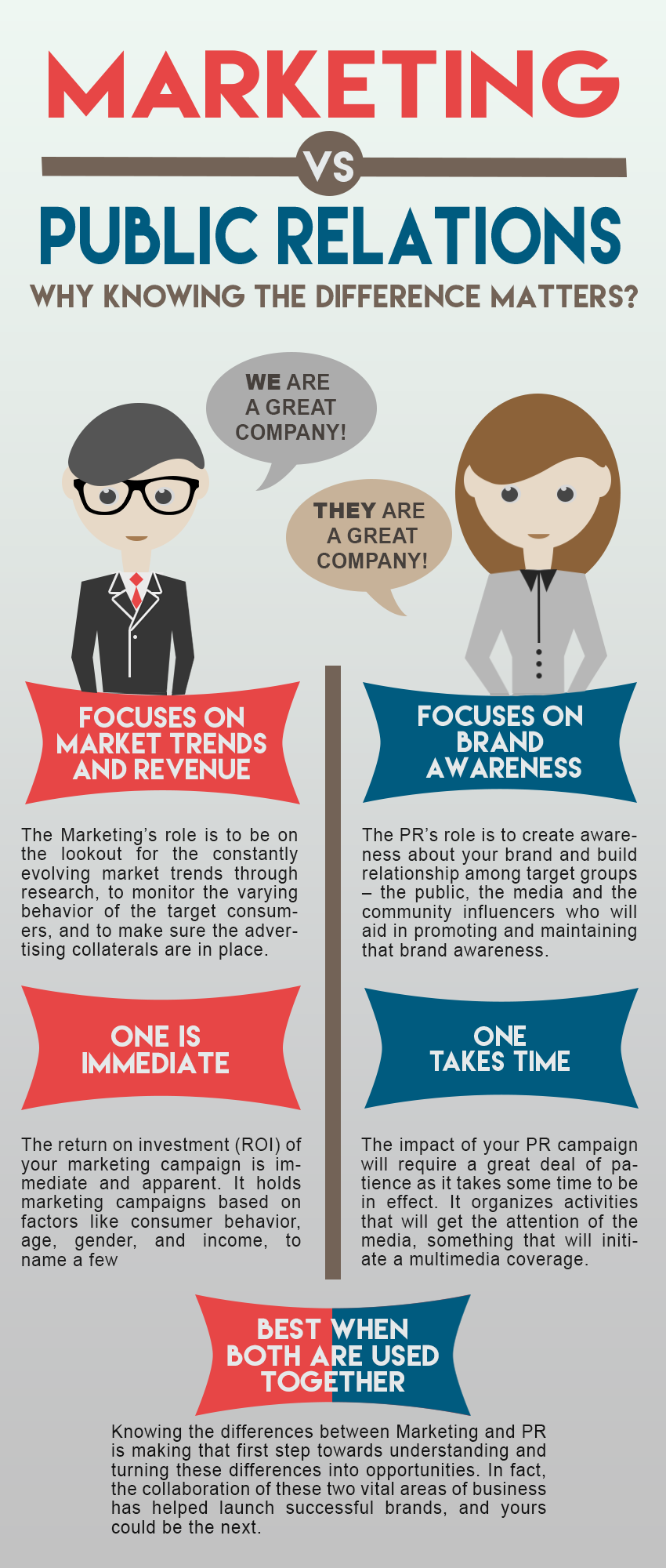
Anyway, discussing my role with the executive director was really interesting and has shown me that a lot of people see PR and marketing as the same thing (Maybe I should have shown him this) . It was good to clearly talk about my role beforehand and confirm exactly what I can bring to the organisation, what they can do for me and projects I would be working on within the PR department.  

Maybe you had a completely different process of going about finding your internship? Let me know in the comments! This is just some food for thought for future PR industry placement students, which I hope is helpful for the initial stages of finding somewhere to get experience.

Tl;dr: Don’t be discouraged if you don’t exactly know where you want to go, take time to figure out what interests you, research the industry and pitch yourself.  


- Aimee

Friday, September 18, 2015

Looking within and beyond!

Internal communications is of upmost importance during a time of change within an organisation; effective communication at all levels ensures employees are familiar with organisational strategic imperatives and that they have the information required to perform effectively in their roles in support of these changes.

In the beginning of the year, the Australian arm that operated international denim brand G-Star Raw known as Denim Enterprises (DE) entered voluntary administration. Across Australia, DE operated 21 mono brand stores and had approximately 200 staff within their business. Although stores functioned as per usual, on an internal level there was apparent disruption in communication during the handover to the administrators, and subsequently to new partners.


However by providing constant communication to the employees during the administration through the use of formal tools such as 'RAW news', the company's weekly newsletter, and top down communication from state managers to part-time associates, a sense of community was formed and more than 80% of the employees stayed on. In the next couple of months, G-Star Raw acted upon the change and took it upon themselves to continue to operate the Australian stores; similarly G-Star approached Denim HQ (the company I work for) to run the WA stores. To sustain the change and continue building relationships with its employees by encouraging a sense of community, they recently conducted the first of a series of training nights around the country. During my last days as an intern with DHQ, I was fortunate enough to attend one of these trainings and witness how the company has managed the change through communication points.

These points were:
  1. Background of G-Star Raw in Australia and changes during administration
  2. New operational teams and points of contacts
  3. Communication points to convey to customers
  4. PR and media campaigns
  5. New products
  6. Q & A
Denim HQ training night with G-Star representatives

Therefore it is with great sadness that my time as an intern with DHQ has come to an end, however nonetheless I am grateful for all that I have learned with this start-up company and incredible brand. Until next time! 

Kim 

Sunday, May 31, 2015

The End Has Come – it’s time to lay all the cards on the table

The final week of my placement with the Pawsey Supercomputing Centre has arrived. The final post is generally always reserve to reflect upon the experiences and achievements obtained across the past 20 days. However, I feel that this post is far more significantly representational as a concluding reflection on the end of my entire University journey, as well as my internship placement. We all have our experiences, our achievements, our skills and our ambition… but where do we go from here? I personally have spent the best part of 18 consecutive years of my life studying, and to label myself as institutionalised is perhaps an understatement. We are no longer safeguarded by outlines of a curriculum, or driven by the timetables of terms and semesters. 

We choose what happens from here on in, with a level of responsibly and accountability that some of us may not be accustomed to. For some, that is an invigorating thought, however for others, perhaps less so. I personally have not made up my mind quite yet on how I feel about this leap towards independence, both personally and professionally. More worryingly, I certainly have not made up my mind regarding the upcoming course of my imminent journey towards reaching my career goals. I have my hypothetical cards all laid out on the table, but deciding which to pick up and use is proving to be a difficult decision.

Upon reflection, I feel deeply appreciative towards both mentors and all that they have consciously and subconsciously taught. The tasks undergone may have been challenging and, at times, stressful, however the internship experience is one that I have enjoyed far more than I could have ever anticipated. At its core, this is a view that is often expressed throughout reflective blog posts, personal anecdotes, and final reports. As a student embarking on an internship experience, comprehending the enjoyment and appreciation is not truly possible until you reach that final day. Realising how much you have learned about the organisation, your skill levels, and your personal attributes within the space of 20 working days can be quite astounding, and equally the most rewarding of achievements.

With that in mind, I feel privileged to have ascertained my experiences throughout the past three years, this internship program being one of the more significant ones. Despite all our inevitable fears surrounding the alternating paths that we will all end up taking, the commonality that we all share, aside from our choice of educational institute, is that we will take what has been taught across the last 20 days, and it will undoubtedly inform our future careers. My internship experience has taught me a great deal across the past three months. However, it has also highlighted how much more I am yet to learn. Upon reflection, regardless of where I choose to turn, it is important to remember that the purpose of my journey is to continue learning. Does this revelation alleviate my fears? I would certainly like to think so. Therefore, my advice to any PR student amidst the cusp of graduation that is perhaps experiencing a similar existential dilemma is to discover your drive and your purpose, and to remember it. Good luck to all of you, regardless of your stage within your degree, goodbye, and thank you for an incredible three and a half years.

Thursday, April 16, 2015

Stop and Listen

So, I’m currently nearing day 10, and I find myself thoroughly immersed in office life! At the moment I am responsible for the task of composing a detailed proposal document. This document outlines the suggested plans for the facility’s exhibition space. The proposed suggestions detail the goals, outcomes, and risks associated with each pragmatic idea. The document also contains an audience analysis, which details the importance of each goal and proposed idea in relation to the audience group and their importance to the facility, followed by realistic event proposals, their costs, benefits and risks for the organisation. It is then presented to the organisation’s managing director for review…

The completion of this proposal document proves to be a challenging task, as it requires the accelerative knowledge from areas of sales techniques, creative event proposals despite the space and resource constraints, stakeholder analysis, risk analysis and crisis management analysis. Given my lack of experience in the nature of events within the WA science community, proposing event ideas and the subsequent facility, versus audience outcomes proves to be a challenging task. Judging the appropriateness and feasibility of space suggestions proves to be a tricky task than one may originally think. Without the context to consider the successfulness or unsuccessful components of past events, and adjust ideas accordingly, making realistic suggestions is challenging. It has become quite apparent to me that we graduate with the ability to communicate, but that doesn’t necessarily mean we know what we need to be communicating. Working within the computational sector has shown me that we, as communicators by trade, have to be adaptable.

From what I have read from other blog posts, it is not uncommon to observe that one of the perks of working within a small department is that my internship experience is particularly hands on. I feel a deep sense of privilege that my experience is shaping up to legitimately prepare me for full-time PR work, and that my supervisors have the level of faith in me to trust that I have the capabilities to construct this document. I suppose after three years of study, it shouldn’t come as that much of a shock to me that I possess the capable skills set. They value my opinions and my perspective, despite my inexperience within the communications industry, let alone the science sector.

If interning has taught me anything, it is that those within the communications industry need to have a broad range of communications skills, outside of PR and marketing. We need to know how to communicate, but more than that, we also need to know how to stop and listen. Communicating comes easily to us. We wouldn’t be here if it didn’t. But understanding what you’re really writing about, now that takes some skill.


Friday, April 10, 2015

The secret to good PR – follow the money?


The organisation I am interning with is currently undergoing a rebranding process from the name iVEC, to Pawsey Supercomputing Centre, as a means of aligning the project's recognised title, with the services and facilities. The overall goal of a rebranding process is to change the brand’s image, which can be done through accumulative changes to the brand identity and the brand experience. Ordinarily, rebranding processes are tailored towards consumers and patrons within a profitable business model, as a means of meeting personal stakeholder goals that emphasise the continuation of profitable business practises. For example, the process of rebranding a profitable business must be undergone with stakeholder considerations in mind, to ensure that business will not suffer through consequential branding confusion or dislike. Subsequently, it makes sense to follow the rebranding trends and preferences of consumers, as they are the profitable driving force. Keep them happy, and the money will continue to flow. My boss refers to this process of consideration, as “following the money”.

However, when undergoing a rebranding process for a not-for-profit organisation, the obvious flaw in the plan is that following the preferential user trends of consumers is not as straight forward, as they are not the organisation’s primary financial stakeholders. Those who utilise the facility within which I am interning will continue to do so, regardless of how well designed the new website is, or how well the interface integrates with the their mobile devises. From a user perspective, the rebranding process does not change the scientific gain from our facility.

So in light of that fact, the question is, who do you tailor the trends of rebranding towards? One would think that you “follow the money”. The financial stakeholders, including investors, both public and private, are the people to tailor the re-branding process towards, right? But you see the problem then faced is then that there are only a handful of individuals that actually sign their names on the checks. So, do you design your entire rebranding template based on those few, in the hope that firstly they remain in their career position, and secondly that you’ve researched their particular tastes and preferences enough to be able to hit their nail on the head? I have since learnt that this particular avenue is both risky and redundant, because the real stakeholder group that holds the most investment within the rebranding process is the facilities employees.

A large number of the employees showcase their research achievements and progressions across the project’s digital presence and physical facility. The process of branding involves cohesively updating, changing and editing existing information to align with the new brand. Understandably, each member of staff has their own investment in public information relating to their work and the facility, and it would appear that meeting the personal goals of each employee, within each department proves, to be the most challenging task within relations to this particular group. One of the most important lessons that I am learning within this role is that diplomacy is everything, and that following the money will not always lead you to profitable outcomes, as people relations is a necessary skill required for successful public relations. 


Sunday, March 15, 2015

Welcome to the first day of the rest of your (working) life

Day one. Let me set the scene for you. It’s 8.40am. I’m sat in the communications office room at the Pawsey Supercomputing Centre. My boss walks into the office with the greeting of “Good morning Kids!” to my second supervising boss and myself. This is the beginning of what I feel like will turn into a nostalgic tradition. I was not wrong.

He sits down at his desk, turns on the desktop computer, swivels his chair around to face me, and asks the second most profound question of the day “So, why are you here?” My reply consisted of something along the lines of  “To watch, to listen, to learn. I know I can write well, but I know nothing about science and supercomputing. This placement will teach me how to write about topics I previously knew nothing about. It will push my boundaries from the word go.”

Now, I’m not going to lie to you, I was rather impressed at my spontaneous response, which was the truth, but not something I had actively considered, no doubt because it scares me half to death. But then again, nothing worth doing is ever going to be easy.

My task for day one consisted of researching and writing an article for Science Network WA entitled “What is big data?” I’m not sure how many of you are familiar with the concept of big data, but I challenge you to do your research and compose a succinct definition that is both understandable for the less scientifically literate reader, yet comprehensive enough to satisfy specialising scientists and journalists.

The only comparative analogy I can give you to demonstrate the difficulty of this task, especially since I haven’t practised journalism since the first year of my degree, is the act of attempting to describe what an orange looks like to someone that has never seen one before. Here you can see the point at which I realise that I am barely doggy paddling through the deep end that I previously referred to as “pushing my boundaries”.

After expressing my struggle to my boss, he explained that you have two choices. He said you can either choose write a piece that dances over the topic and ticks the boxes, or you can get down to the in-depth explanation into what makes big data big. And with the help of some hand-drawn umbrella diagrams, he asked me “which approach do you want to take?” That was the most profound question of the day, because right there and then it made me question what kind of writer, and by extension public communicator, do I want to be? Well, I think I’ll have to get back to you with an answer at then end of day 20.


Both my bosses appear to be hilarious, welcoming, abrupt, kind, real, open, honest and intelligent. They hold the level of intellect towards communications that I dream of possessing. I know that I will learn more from them over the next 19 days than any unit could teach, and despite the doggy paddling, I also know that I will enjoy the next few months more than I could have thought possible.

Saturday, October 11, 2014

How I made my boss cry

The theme of this blog is event planning and I’ll be talking about a Farewell Reception I organised for my boss and a big event I’m planning for October 22.

In a bittersweet moment, I had the opportunity to organise a Farewell Reception for Clubs WA's Executive Director of 14 years, Mr Peter Seaman. It was held a couple of weeks ago at the University Club of Western Australia and aimed to be an intimate and laid-back event where Peter could say goodbye to the "VIPs" of WA's club industry. I was very nervous as this was the first event I had to organise for Clubs WA, and really the first event I've had to organise ever. Thankfully the University Club hosts thousands of events every year and are prepared for almost everything. 

Below I have listed briefly what I had to organise in the weeks leading up to the event:
  • Booked the venue and confirmed day and time.
  • Put together a guest list of relevant Ministers, Corporate Partners, industry representatives, supporters, State Council and staff.
  • Sent out save-the-dates.
  • Followed up save-the-dates with emails to Ministerial secretaries, and other VIPs.
  • Drew up budget.
  • Sent out official invitations.
  • Bought a gift for the ED.
  • Visited the venue to get an idea of room layout and AV equipment.
  • Chose the food and beverage menu.
  • Confirmed all attendees and the correct spelling of their names.
  • Printed all names onto name tags.
  • Organised everything for a registration table.
  • Plus so, so much more. 

The event turned out really well and thankfully ran smoothly. Sport & Recreation Minister Tuck Waldron, Racing & Gaming Minister Mick Murray and Commissioner for Consumer Protection Anne Driscoll each made a thoughtful and personal speech about their experiences of working with Peter over the past decade or so. My boss became quite teary at one point and Mick Murray made a funny speech and both of them turned red.

Although the event was quite small, with about 60 people showing up, it was still nerve wrecking having to organise the event with absolutely no experience! But it has prepared me for my next event in October, which has an expected attendance of about 130 people.

The next event I’m organising and the one that’s causing me heaps of stress is the Clubs WA Training, AGM & Networking Event on October 22.

I’ll admit that I haven’t been given a huge amount of guidance or instruction when it comes to organising either of these events and it’s making me pretty stressed. I’ve basically organised this AGM & Networking Event by looking through the previous Events Officer’s file where she has kept hardcopy invoices of everything she ordered for last year's event, and then deciding what was useful this year.  I’m so grateful that she kept such good records of everything and I plan to do the same!

Last year’s event began at 10am with an hour long Annual General Meeting (AGM) and Clubs WA company update, followed by a luncheon, trade expo and then entertainment.

This year we have decided to tie the event in with the launch of two new training workshops, Good Governance and Workplace Relations, which will begin in the morning, followed by a Canapé Reception, AGM, Clubs WA Update, Networking Luncheon, Club Leadership Panel, and then a Social Hour. This year’s theme is training and networking and we think this will boost numbers opposed to an otherwise boring AGM.


My three biggest fears for the AGM Event are that we don’t get enough numbers, that I haven’t planned well enough, and that the event goes over-budget.

Achieving the attendance goal:
I set myself the attendance goal of 130 people but I’m quietly hoping for 150.
Other than for that fact that it would heartbreaking if no one came, our Corporate Partners (sponsors) are attending so they can network with our members, and I don’t want them to think the event was a waste of time.

Last year’s Trade Expo component felt a little pushy, and most of our sponsors have been with us for a long time so their products are well known by our members. This year, I’ve planned lots of ‘break-out’ sessions for networking. For example, rather than having a three-course sit-down meal, I thought it would be nice if we served the entrée as a ‘canapé reception on arrival’ – this way our members are able to mingle and network with other industry reps and sponsors in a more informal way – think a bigger version of  ‘water-cooler talk’.

We’re 12-days out from the event and so far we have a 110 people registered which is 23 more people than last year! I think I’m doing okay promotion wise, even though I was aiming for 130 people.

We started promoting the confirmed date of the event in May, and since then have been putting articles in our monthly newsletter/magazine, in our fortnightly email blasts, on the website and through social media. My boss told me that 6-weeks out from the event we should start calling clubs, as phone calls are so much more personal. However, when we started calling clubs 6-weeks out, the majority of people we called didn’t know much about the event.

Our monthly newsletter is only sent to one person on a club’s Board (usually the Club President or CEO) and the fortnightly emails to two or three – so from calling our members I’ve realised that the Board Members do not pass information on!

So 6-weeks out from the event, instead of convincing people to purchase tickets, we were calling people to tell them about the event, which was frustrating. I instructed everyone to follow-up any phone call they made with an email thanking people for their time and to attach a copy of our event information pack and registration form. Luckily this seems to have worked, and I’ve left a note for next year’s event organiser to make the calls much earlier – I really think this would boost the numbers!

You can have a look at some of the information that was included in the event info pack and an article about the speakers written in the monthly newsletter, by clicking on the below images.


Event planning
I shouldn’t admit this, but I’m one of those people who leave things to the last minute (some of you will know this ;)). I think that I know myself pretty well, and I know how long I need to get things done properly. Looking at the timelines and schedules from last year’s event I know that the previous Events Officer had written the MC Script, running sheet, staff roles etc. more than three months out from the event. While this might have suited her, she would have had to of updated the scripts and running sheets constantly in the months leading up to the event as new things were decided – and I personally feel like this would have been a waste of time. Instead, I spent a total of eight hours working on the MC Script, running sheet, room plan, assigned staff roles, and an overview running sheet for sponsors just a little over two weeks from the event, and they were all approved within two days and I may only need to make one or two tiny changes. I do believe there is such a thing as over planning!

My point here is to know how long you need to complete tasks properly, and how to work to be productive.

If you have any easy networking ideas to get people talking, please feel free to share! One idea I’m thinking of is to ask people to write three words on their name tag, for example, Cambodia, photography, cricket, travel or scrap-booking, to give people conversation starters. Maybe there’s a person who’s thinking about going to Greece and then they spot someone who has Greece written on their nametag... BOOM conversation starter!

Anyway, until next time!

You can find my past blog posts here:

I hope everyone else is still enjoying their internships, and if you have any tips about event planning, promotion, or networking I would love to hear from you J